

One size does not fit all when it comes to a Will. There are several types available and we are here to help you decide on which one best suits your needs.
Talk to Banner Jones. We are ready to help you.
No two Wills we write are ever the same but here are some typical examples of the Wills we write:
Typically for a husband and wife with a modest estate who want to leave everything to each other and then on to their children.
A typical scenario would be a husband leaving his whole estate to his wife. If she dies before her husband then his whole estate is divided equally between their adult children. The wife makes a Mirror Will which reflects her husband’s Will. This type of Will is suitable for clients who have modest assets and where the adult children are their natural children i.e. there are no step children involved. Clients sometimes are not aware however that if the husband leaves everything to the wife and dies first, then she is free to make a new Will in the future. She may remarry and leave everything to her new husband rather than her children.
This type of Will (also known as a Life Interest Trust Will) is suitable for those clients who want to ensure that their share of their main asset i.e. the family home, is inherited by their children.
The Will ensures that the surviving spouse (who may already own a share of the family home) has the right to live in the property for the rest of his/her life but will not inherit the ownership of the deceased’s share of the property. This type of Will is often used where there are step-children involved so that the needs of all family members can be taken into account. Clients who are concerned about the family home being used to pay for the surviving spouse’s care home fees can also benefit from this type of Will.
Where the main beneficiaries of the Will are young children then extra provisions are recommended. Careful thought should be given to who will be the Trustees that will look after the assets until the children are old enough to inherit. Parents can appoint Guardians who will be responsible for the day to day care of the children.
The Guardians and Trustees do not have to be the same people. The age of the Trustees can be a factor – appointing grandparents who may have to manage the money for over 20 years may not be the answer.
Very often professional Trustees such as solicitors are the most appropriate Trustees who will invest the money with the benefit of professional expert advice rather than leaving inexperienced Trustees who very often leave the money to sit in a low-interest bearing bank account.
There are many types of specialist Wills. A Discretionary trust Will remains a popular choice. This Will places the estate into a flexible type of trust known as a Discretionary Trust. With the right Trustees in place it allows the deceased’s estate to be distributed as the family decide in the future. It allows the family to “wait and see”. Clients who are worried about beneficiaries with financial problems or possible divorces see the benefit of these types of Wills. We can also write special types of Wills including Trusts for disabled and vulnerable people.
Bloodline Wills are also popular as these Wills ensure that the assets are passed along the bloodline of the family rather than being passed to the spouses or partners of your children or grandchildren. Where families are merged, circumstances within the second family can often become complex but we can help put Wills in place to help you reach a solution.
If you are unsure as to which type of Will would be best for you and your family then please get in touch and we will be happy to discuss this with you. All of our Wills are tailor made to suit your needs.


Making a Will is commonly associated as something you do in later life however, in reality anyone over the age of 18 can have a Will and we would strongly recommend it to anyone with children.
Mrs C, ChesterfieldThe service I received couldn't have been better!
Talk to Banner Jones. We are ready to help you.
If it can be shown that a trustee has breached their duty (either their legal duty or a duty pursuant to the terms of the trust) then the actions of a trustee may be subject to legal challenge. In some circumstances trustees may be removed from office by an order of the court.
No. Wherever possible we will seek to resolve the dispute informally by negotiation and alternative dispute resolution. The majority of trust disputes reach settlement without the need for court proceedings to be commenced. Should this approach not prove successful however, we have experience and expertise in trust litigation and court proceedings can be commenced.
It is difficult to accurately predict the total cost of any dispute as no two disputes are the same and the costs are largely dictated by the amount of work required to bring the dispute to a final resolution. We appreciate that clients do not like uncertainty in relation to legal costs and depending on the circumstances of the case, we are able to offer a number of funding options to clients in order to suit their needs.
A trustee has the legal responsibility for assets held in a trust and is required to manage the trust in accordance with the specified terms and the settlor’s wishes. Trustees are subject to various duties and as part of their function, including a requirement to: -


A poorly drafted DIY Will led to probate delays and legal uncertainty. Learn how our Probate solicitors in Sheffield helped the family navigate the fallout and protect their rights.

If you haven’t made a will yet—or if you’ve used a DIY service—it’s time to think again. With more people than ever challenging wills in court, having your will written by a professional will solicitor in Sheffield is no longer just a good idea—it’s essential.

It will come as a surprise to nobody that retirement is one of the biggest lifestyle changes you’ll ever experience. But as your priorities shift and the free time available to you increases, what you might not be as aware of is the way in which your spending habits are likely to alter too.

Discover how gifting assets during your lifetime can reduce inheritance tax (IHT) in England. Learn about tax-free allowances, the 7-year rule, and smart estate planning strategies to protect your wealth.
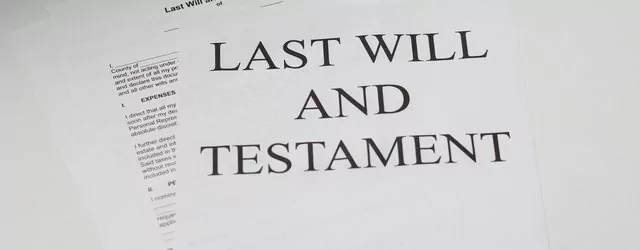
In a recent legal case, a son successfully contested his late mother's £700,000 will after evidence revealed that his sister had physically manipulated their ailing mother's hand to sign the document.

Making a Will is commonly associated as something you do in later life however, in reality anyone over the age of 18 can have a Will and we would strongly recommend it to anyone with children.

Writing Wills during a marriage that leaves everything to each other upon death is very common, but what happens to that Will should you decide to end the marriage and get divorced?


Kathryn Wheeldon discuses the different types of Wills that are available, and how to decide which one to choose.

If your loved one dies without leaving a valid Will, there are strict rules in place known as the ‘Intestacy Rules’ which decide how their estate is divided.

Internet shopping may have boomed during the pandemic, but many people have spent less than usual while forced to stay home during the periods of lockdown. For those with spare money, they have an opportunity to make the most of inheritance tax reliefs on gifts to family and friends if they act swiftly.
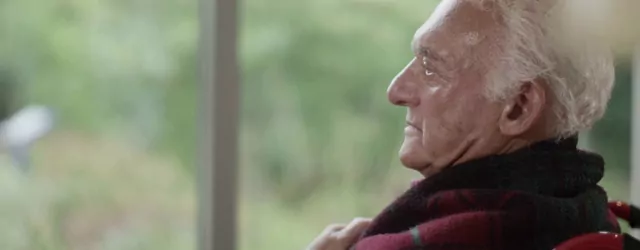
When a loved one is diagnosed with dementia, families are often thrust into a whirlwind of emotional, medical, and legal decisions. Among the most critical—but often overlooked—steps is arranging a Lasting Power of Attorney (LPA).
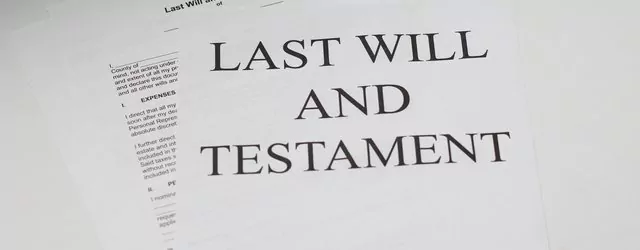
The Coronavirus has affected everyone in many different ways, but one thing is for sure, it has provided a reminder to many of us about the importance of having our personal affairs in order. For most people this process starts by writing a Will.
We are getting a lot of questions from clients around this topic at the moment, so we thought that an article outlining the intestacy rules would help to guide you.

The last few weeks have forced us all to change the way that we live our lives. From working, to schooling, to socialising and even shopping – we have had to adapt. There is no doubt that technology has played a big part in allowing us to adapt and indeed stay somewhat connected to the loved ones that we cannot meet in person.

A new system alerting charities to when they have been left money in wills is to be established by HM Courts and Tribunals Service (HMCTS) following a decision to end its current arrangement.
When we think about what we leave behind when we die, the majority of us take an approach that gives little regard to the vast amount of digital assets we hold.

We all increasingly live our lives online whether it be through various social media profiles to paperless billing for your gas and electricity account. When you’re in control, there’s no denying it makes life simple and even if you lose or forget your password, a link will be sent to your email account and within seconds you’re back in control.

If you are thinking of giving away your home or other assets you must read this. Download our free guide today.

There’s no denying the huge steps forward seen in creating equality for same-sex couples in the UK during the 21st Century, first with the Civil Partnership Act 2004 and then the Marriage (Same Sex Couples) Act 2013. However, as heterosexual couples have marriage as the only option open to them to make their relationship formal, there have been suggestions of a new inequality having now been created. A legal challenge by mixed-sex couple Rebecca Steinfield and Charles Keidan to be able to enter into a civil partnership instead of a marriage was unsuccessful earlier this year, meaning it’s unlikely the situation will change for heterosexual couples in the near future.

Research just published underlines how ill-prepared most people are in terms of their end of life planning.

Wills for everyone in the family can be expensive. Read about our exclusive Family Wills Bundle offer, easily explained by the Jones family, here!

What’s the worst that could happen if you don’t have a Will? Our expert Wills solicitors have explain what can happen, in simple terms, in our guide.

There are lots of quick and cheap ways to write a will, so why do people use legal professionals? Open the infographic to find out why...


Last week, during the Budget, the Chancellor formally announced a key change to Inheritance Tax (“IHT”) that would take affect from 2017.

The financial effects of divorce last much longer than the initial cost of the break up.


Mr B, MansfieldStaff were fabulous, very personable and certainly knew their jobs.
Mr & Mrs B, SheffieldWills writing
Jenna was fantastic, I will definitley recommend to family and friends. I will not hesitate to use your services again.
Mr B, MansfieldWill Writing
My experience with your company has been beyond reproach, my adviser was just superb, her advice and care and understanding were absolutely first class.
Mr & Mrs S, ChesterfieldWe wish to thank Banner Jones for incredible assistance in guiding us and explaining the process of our Wills and LPA'S.
Mrs F, Old WhittingtonI am a 93 year old lady, and I was treated as if I was family. Caring and helpful in explaining everything to my dull brain. Thank you.
Mr G, ChesterfieldFrom the minute you walk into reception you are put at ease, and this continues right through the chain. Would recommend them any time.
Mrs S, ChesterfieldI can’t thank Banner Jones enough for the kindness and patience, and would highly recommend this firm.
Mr & Mrs W, GrassmoorWill Writing in Chesterfield
All our wishes were sorted by the solicitor with no problems, and in an easy and understandable way. Have already recommended Banner Jones to family and friends.
Mrs H, AshgateWill Writing
Excellent company. Highly satisfied.
Mr S, BrimingtonWill Writing
Excellent service. Professionally done.